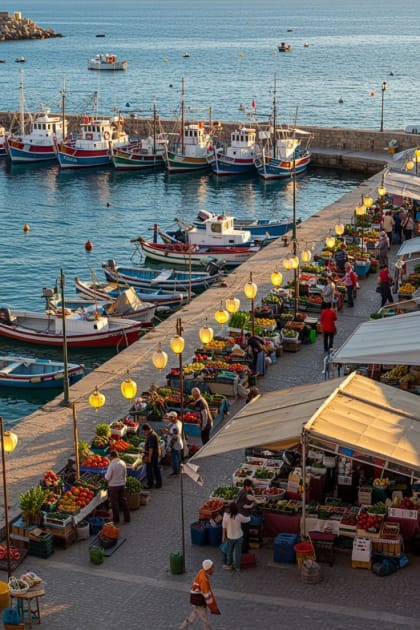
Long before a packet of black pepper or a bag of cashew reaches a Bengaluru kitchen shelf, a large share of it has already passed through one specific gateway: New Mangalore Port, on Karnataka's own coastline. The port handles a substantial volume of the state's spice, cashew, and coconut trade, alongside a fishing economy that feeds much of coastal Karnataka's seafood into inland markets, Bengaluru included, and most households buying these goods have no idea that journey started at a port rather than a farm.
What actually moves through Mangalore for Karnataka's kitchens? New Mangalore Port is one of India's major cargo ports, and its role in Karnataka's food economy is significant even though it rarely gets discussed in household terms. Cashew processed in and around Mangalore and Dakshina Kannada, spices arriving from Karnataka's Western Ghats belt and beyond, and a steady seafood catch from the Arabian Sea coastline all move through this corridor before being distributed inland, much of it eventually reaching Bengaluru through a chain of wholesale markets and distributors. A significant share of what fills a Bengaluru household's spice rack and fish counter has a coastal Karnataka origin story that the price tag never tells. Where the cost actually builds up on the way inland • Port handling, storage, and customs-adjacent processing add a fixed cost layer before goods ever leave Mangalore, regardless of final destination. • The road route from Mangalore to Bengaluru, largely via the Bengaluru-Mangalore highway corridor through the Western Ghats, adds transit time and cost that varies meaningfully with monsoon conditions given the terrain. • Each additional wholesale or distributor layer between the port and a Bengaluru kirana shelf or dark store adds its own margin, the same multi-layer problem that affects Karnataka's inland farm produce.
Why seafood specifically is the most time-sensitive part of this chain Fresh seafood from Mangalore and the broader Dakshina Kannada and Udupi coastline has the shortest usable window of anything moving through this corridor, and the gap between a genuinely fresh catch and a Bengaluru household's fish counter depends almost entirely on how tightly that inland transit is managed. A household paying a premium for fresh coastal seafood in Bengaluru is really paying for how well that specific cold chain held up over roughly a 350-kilometre route, not simply for the fish itself.
How FarmChain approaches coastal sourcing differently FarmChain's sourcing philosophy, direct relationships with producers and fewer intermediary layers, applies to coastal Karnataka goods the same way it applies to Kolar's vegetables or Mandya's produce: fewer hands between the coast and a Bengaluru kitchen, and FarmTrace visibility into whether a specific batch of cashew, spice, or seafood genuinely came from the coastal Karnataka supply chain it claims to, rather than an anonymous wholesale blend.
Know whether your spices and seafood actually came from Karnataka's coast.
FarmTrace gives Bengaluru households real visibility into coastal Karnataka sourcing.
Join the waitlist at accescoliving.com