Bangalore has always been a city where convenience matters. With long commutes, busy work schedules, students living away from home and a growing population of young professionals, the way people shop for groceries has changed significantly.
A few years ago, visiting a nearby kirana store in Bangalore was the obvious choice for everyday essentials. Today, quick commerce platforms allow customers to order groceries and household products through an app and get them delivered within a short time.
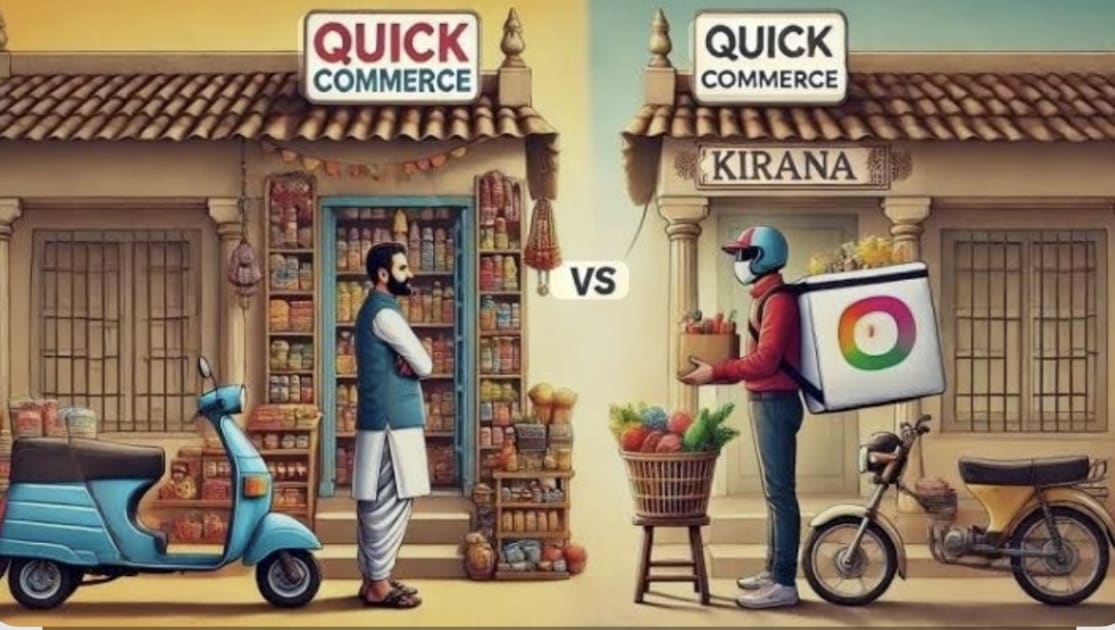
This raises an interesting question: Will quick commerce replace Bangalore's traditional kirana stores or will both continue to coexist?
The answer is likely to be a combination of both. The Rise of Quick Commerce in Bangalore, Quick commerce has become increasingly popular across Bangalore because it solves a very simple problem: convenience.
Someone living in Koramangala might suddenly need milk or vegetables. A student in Indiranagar may realise they have run out of snacks before an evening study session. A working professional in Whitefield may need an essential after returning home from work.
Instead of visiting a supermarket or neighbourhood store, they can open an app and place an order from their phone.
This convenience has made quick commerce in Bangalore particularly attractive to people with busy lifestyles. However, convenience also comes with questions about product freshness, pricing, packaging, substitutions and delivery conditions.
This brings us to an important question: Is faster grocery delivery always better? Why Bangalore's Kirana Stores Still Matter Despite the growth of quick commerce, local kirana stores in Bangalore continue to play an important role.
A neighbourhood shopkeeper often knows their customers personally. Regular customers may have an established relationship with the shopkeeper and may even receive flexible payment or purchasing options.
For many families, buying groceries from a familiar local store is also a matter of trust.
Kirana stores also contribute to local economies by supporting small business owners and creating employment within neighbourhoods.
Whether you live in Jayanagar, Rajajinagar, HSR Layout or Malleshwaram, there is a good chance that a local grocery store is within walking distance.
That proximity is something digital platforms cannot completely replace. Why Quick Commerce Is Still Growing At the same time, it would be difficult to ignore the appeal of quick commerce. For Bangalore's students and working professionals, time is valuable.
Ordering groceries online means customers can avoid traffic, queues and unnecessary travel. Digital platforms also allow customers to browse several products and compare prices before placing an order.
For urgent purchases, this can be extremely useful. The challenge for the industry is ensuring that convenience does not come at the expense of quality and reliability.
A grocery order being delivered quickly is useful only when the products are fresh, correctly packed and what the customer actually ordered.
The Future of Grocery Shopping in Bangalore The future probably won't be about one model completely replacing another. Instead, Bangalore grocery shopping may become a combination of traditional retail and digital commerce. A customer might visit their neighbourhood kirana store for their regular monthly purchases while using a quick commerce platform when they urgently need something.
This gives consumers more choice rather than forcing them to rely on one method.
At the same time, new commerce models are emerging that are trying to combine convenience with greater transparency. One example is Accesco Living's Grokly, which is being developed as a farm-direct grocery service for Bangalore. The concept focuses on sourcing produce directly from Karnataka farms along with transparent pricing and QR-based traceability.
Grokly is currently in its pre-launch stage, but the idea reflects an important shift in how grocery delivery could evolve.
The future may not simply be about asking: "How quickly can my groceries reach me?" Consumers may increasingly ask: "Where did my groceries come from?" "Are they fresh?" "Is the pricing transparent?" "Can I trust the platform?"
Quick Commerce vs Kirana Stores: Who Wins? There may not be a single winner. Quick commerce offers speed, convenience and digital accessibility. Kirana stores offer familiarity, personal relationships and neighbourhood-level trust. Both have strengths that appeal to different types of customers. The bigger opportunity may actually lie in combining the best aspects of both models. Bangalore's consumers are becoming more comfortable with digital shopping, but they are also becoming more conscious about freshness, sourcing, pricing and reliability.
What Does the Future Look Like? The grocery market in Bangalore is changing, but traditional stores are not necessarily disappearing. Instead, the future could involve several models existing alongside one another. Kirana stores can continue to provide personal service and neighbourhood convenience while digital platforms can offer customers greater accessibility and convenience. Meanwhile, emerging platforms can experiment with models that bring together fast delivery, local sourcing, transparency and technology. The grocery experience of the future may therefore not be defined by speed alone. For Bangalore consumers, the winning combination could be simple: Convenience when you need it. Quality when it matters. Transparency you can trust.