
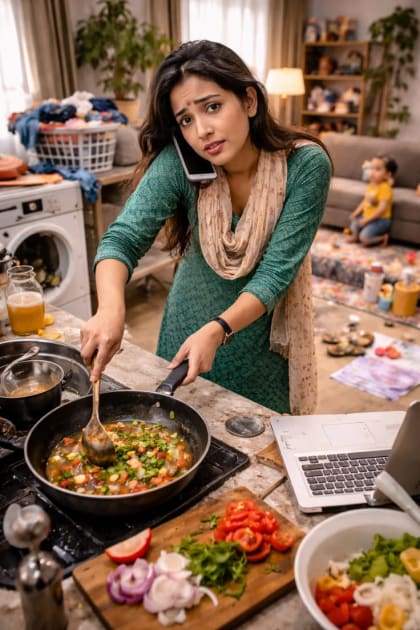
Topic: Unpaid cooking labour in Indian households, who carries it, and why a decade of quick commerce left it untouched. Groceries now arrive in ten minutes. Dinner still takes an hour, and the same person usually makes it. The problem as you live it. Ask anyone who runs a kitchen what their day looks like and the answer is a timetable. Breakfast before school and office. Lunch packed or cooked. Dinner after a full day, with the washing-up to follow. Each meal is a sequence: decide, check what is in the fridge, chop, cook, serve, clean. The shopping trip that used to sit between those meals has mostly gone, because a basket of vegetables can be at the door before the water boils. The cooking itself has not moved an inch. It still takes about an hour a meal, and in most homes it still falls on one person, usually a woman, often on top of a job. Why it happens. Every tool built for the kitchen in the last decade was built for the shopping part. Delivery got faster, catalogues got bigger, payment got easier. The part that takes the time, standing at the stove, was left where it was, because nobody could put it in a box and deliver it in ten minutes. The result is a strange imbalance: the twenty-minute errand was solved with billions of rupees of infrastructure, and the three-hour daily job that followed it was not touched. Twelve Everyday Problems: Blog Series (Draft) What it costs. India’s Time Use Survey 2024, published by the Ministry of Statistics and Programme Implementation, found that women spend 289 minutes a day on unpaid domestic work for household members, against 88 minutes for men. The 2019 survey showed that cooking, cleaning and childcare make up about 85 per cent of that time. Nearly five hours a day, most of it in or around the kitchen, none of it counted in any wage or GDP figure, and very little of it shared. It shows up as the job a woman turns down because it does not fit around dinner, the hobby that never restarts, the evening that is always already spoken for. What you can do today Cook once, eat twice: pick two dishes a week that reheat well and double them. Keep a rotation of ten dishes the family actually eats, so the deciding is done once, not nightly. Share the stove deliberately. A teenager who owns one dinner a week is a real gift to the house. Prep the next meal while the current one simmers: chop for lunch while dinner cooks. HowAccesco approaches it. We built the whole service around this hour. Pick a dish and choose how much of the work you want us to do. Get the ingredients delivered in the exact quantities, get the dish cooked in our OriCircle kitchen and delivered hot, or get an Accesco cook who arrives with the groceries and cooks it in your kitchen, from 6 am to 9 pm. Same dish, three ways, from one store, on one ride. The hour at the stove becomes a choice the household makes each evening, not a given it inherits each morning.
.The Hour atthe Stove:Why Faster Delivery Did Nothing for the PersonWho Cooks.
Business
November 2, 2026
About Accesco
Learn more about usExperience India's Everyday Living App
Be among the first to explore Grokly & Swadisht before the Bengaluru launch.