
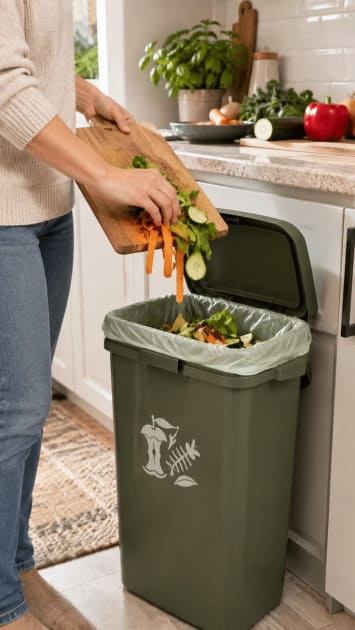
Topic: Household waste generated by delivery, why the return leg of every ride is wasted, and how reverse logistics on the same ride closes the loop. Every order arrives in a bag inside a bag. The rider leaves with nothing. The household deals with the rest. The problem as you live it. Open the cupboard under any Bengaluru sink and you will find it: a bulging bag of plastic carry bags, paper sacks, bubble wrap and food containers that arrived over the week. Peels, stale bread and the vegetables that turned sit in the kitchen bin. Segregation rules make it the household’s job to sort all of it into wet and dry, and the same platforms that deliver a dozen packets a week offer no way to send anything back. The convenience arrives at the door; the clean-up stays behind it. Why it happens. Every delivery system is built for dispatch. The ride goes out full and comes back empty, and nobody has priced the return trip, because nobody is paid for what comes back. Packaging is designed to protect the order for ten minutes, not to be reused or collected. The waste is treated as the customer’s problem the second the bag changes hands, and from there it is the city’s. What it costs. For the household, a weekly sorting chore and a cupboard that fills faster than it empties. For the city, more packaging in the stream and more wet waste that could have become compost going to landfill instead. For the farms that grow the food, the nutrients in that wet waste are simply lost, when they could have gone back to the soil. What you can do today Refuse the extra bag at the door; most riders will take it back if asked. Keep a wet and dry bin in the kitchen itself, not on the balcony, so sorting is a reflex and not a trip. Compost peels if your building has a unit, and ask the RWA for one if it does not. Flatten and store clean packaging in one bag and hand it to the dry-waste collector weekly. HowAccesco approaches it. The ride that brings your order can take waste away. Eco Return collects eligible biodegradable waste and plastic packaging on the return leg of a delivery that is passing anyway, so the cost of collection is close to zero and the rider does not go back empty. Biodegradable material goes to composting and comes back as organic fertiliser for the farmer producer organisations we buy from; suitable plastic goes to recycling partners. In our survey, 86.6 per cent of households said they would definitely or probably use a service that rewards them for returning eligible waste. The loop is closed on the same ride, which is the only place it can be closed cheaply.
The Pile of Packaging Nobody Takes Back: Delivery Builtfor Dispatch, Not Return
Business
November 2, 2026
About Accesco
Learn more about usExperience India's Everyday Living App
Be among the first to explore Grokly & Swadisht before the Bengaluru launch.