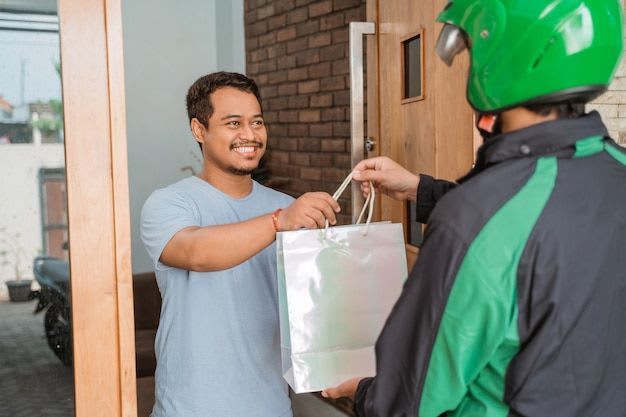
Somewhere around 2021, Indian quick commerce entered a race that had a single scoreboard: minutes. Ten minutes became eight. Eight became a talking point on every investor call. The industry got very good, very fast, at one specific thing — moving a product from a dark store to a doorstep.
What it never got better at is the thing that actually determines whether a household's week runs smoothly: whether its grocery order, its dinner plan, and its wardrobe are working with each other or against each other.
Why did speed become the only metric that mattered? Because speed is easy to measure and easy to market. "10 minutes" fits on a billboard. "We understand your household's weekly pattern" does not. So an entire industry optimised around the number that was simplest to compete on, and complexity — the kind that actually determines whether a family's week goes smoothly — got left for someone else to solve.
Every platform got faster. None of them got smarter about the household ordering from it.
This is not a criticism of the delivery layer itself. Fast, reliable delivery is genuinely valuable infrastructure, and quick commerce built real capability in India that didn't exist a decade ago. The gap is what sits above that infrastructure — the layer that should understand a household as an ongoing pattern of needs, not a series of disconnected ten-minute transactions.
What does a household actually need beyond speed? Three things that speed alone doesn't provide: Continuity. A grocery app that forgets your last fifteen orders the moment you close it is fast, but not useful in any compounding way. Cross-category awareness. Speed within groceries doesn't help if the food order placed two hours later duplicates half of what was just delivered. Reduced decision load. The fastest checkout still requires a full decision cycle if the app has no memory of what you usually buy.
Ten-minute delivery solved the "how long does this take" question. It left the "why am I re-deciding the same things every week" question completely open.
Is the next phase of Indian commerce still about speed? Speed will stay table stakes — nobody is going back to slow delivery. But the differentiator is shifting. When every major platform can get a product to your door in roughly the same window, the competitive edge moves to whichever platform actually understands the household ordering from it, rather than treating every order as a fresh transaction with a stranger.
How Accesco Living approaches this differently Accesco Living was built on the observation that India solved delivery in 10 minutes. Nobody solved the household in 10 years. Rather than entering the speed race with a fourth or fifth quick commerce app, it unifies three categories that households manage every week:
Grokly for groceries and everyday essentials Swadishtt for meals made only for you InstaStyle for fashion delivered on your schedule
Because these live inside one ecosystem, the platform can carry context forward — a full pantry informing a meal suggestion, a recurring order shaping what shows up first next time — instead of resetting to zero with every app switch.
Speed gets you to the door fast. Coordination is what makes the order worth placing in the first place.
Accesco Living is currently building its founding community in Bengaluru ahead of launch.
Join the waitlist at accescoliving.com